Fixed and Variable Rates: Will Your Payment Ever Change?
A fixed rate is locked in when you sign and never moves. A variable rate follows a published index and can move after you sign. Here is how to tell which one an offer carries, what the disclosure must spell out, and what a two-point rise does to a payment.
The price, by LendCedar Editorial Team Updated 7 minute read
In short
A fixed rate is set when you sign and does not change, so every payment is the same. A variable rate equals a published index, such as the prime rate or SOFR, plus a margin the lender sets, and it can rise or fall with the index. Regulation Z requires a lender offering a variable-rate personal loan to disclose when the rate can rise, any limit on the rise, its effect, and an example payment. If you cannot absorb a higher payment, ask for a fixed-rate quote.
- Variable rate formula
- Index plus a margin
- Bank prime rate, Oct. 2026
- 7.00%
- +2 points after a year
- +$8.64 a month
- Disclosure rule
- 12 CFR 1026.18(f)
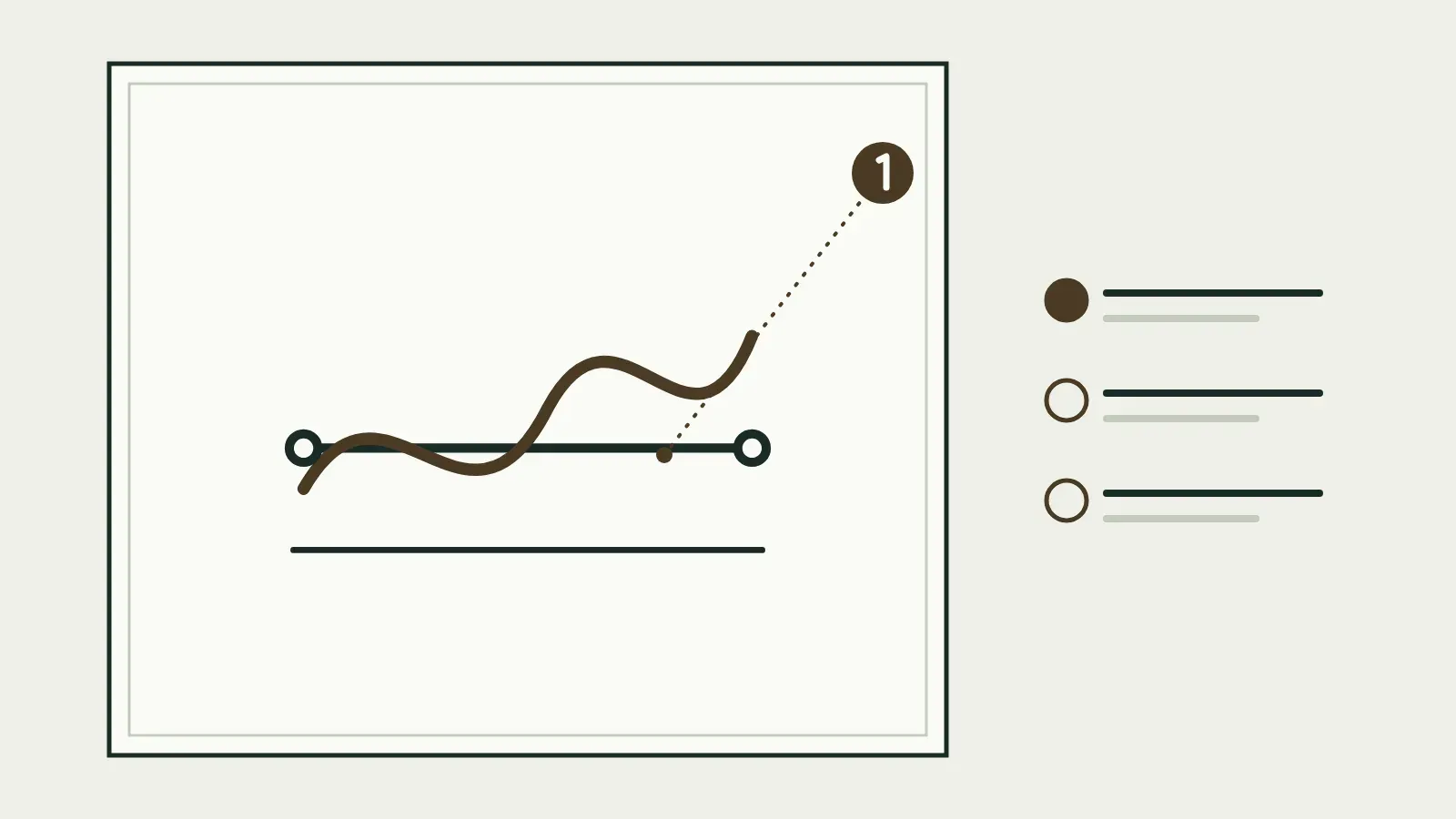
Two ways a loan can set its rate
The Consumer Financial Protection Bureau notes that personal loan rates can be either fixed or adjustable. The difference is whether the rate in your agreement is a single number or a formula.
Fixed rate
One rate for the whole term. The payment, the finance charge and the total of payments on your disclosure are what you will pay if every payment is on time.
Variable rate
A rate that resets on dates set in the agreement, by adding a fixed margin to the current value of an index. Your payment, your term or both can change when it resets.
Fixed rates are common on personal loans, but not universal. A Federal Reserve analysis of credit bureau data at the end of 2022 found that about 72% of fintech lenders' personal loan balances and 53% of depository institutions' balances carried fixed rates, while only 12% of finance company loans had fixed rates. So check every offer; do not assume.
The indexes a variable rate can follow
The index is a rate published by someone other than your lender, so the lender cannot move it at will. The agreement names the index, the margin and how often the rate resets. Two you may see:
- The prime rate. The Federal Reserve's H.15 release reports the bank prime loan rate as the rate posted by a majority of the top 25 insured U.S.-chartered commercial banks. It was 7.00% each day from October 19 to 23, 2026.
- SOFR, the Secured Overnight Financing Rate. The Federal Reserve Bank of New York describes it as a broad measure of the cost of borrowing cash overnight against Treasury securities, and publishes it each business day at about 8:00 a.m. Eastern time.
Older variable-rate loans were tied to LIBOR. The CFPB has warned that LIBOR was being phased out and that most loans would move to a SOFR-based replacement; if you have an older loan, its contract shows which index now applies.
What a rate change does to a $10,000 loan
Take a $10,000 loan for 60 months whose rate is the prime rate plus a 7-point margin: 7.00% + 7.00% = 14.00% at the start. The rate resets once, after 12 payments, and the new payment is figured on the remaining balance over the remaining 48 months. These are worked examples, not offers, and the margin is chosen only to make the arithmetic easy.
| Index after one year | Rate for months 13–60 | New payment | Total interest |
|---|---|---|---|
| Unchanged at 7.00% | 14.00% | $232.68 | $3,960.80 |
| Up 2 points to 9.00% | 16.00% | $241.32 | $4,375.52 |
| Down 1 point to 6.00% | 13.00% | $228.43 | $3,756.80 |
After a year the balance is about $8,514.95. A two-point rise adds $8.64 to each of the last 48 payments and $414.72 to the interest; a one-point fall saves $204.00. Some agreements keep the payment the same and change the number of payments instead, so a rise can make the loan run longer. Read which method yours uses.
What the disclosure must tell you about a variable rate
For a closed-end loan not secured by your home, Regulation Z section 1026.18(f)(1) requires four statements when the APR may increase after you sign. Look for them near the APR on the Truth in Lending disclosure.
- The circumstances under which the rate may increase, which on most loans means the index and the reset dates.
- Any limitation on the increase, such as a cap on how far the rate can rise at one reset or over the life of the loan. If there is none, the disclosure should not suggest one.
- The effect of an increase: a higher payment, more payments, or a larger final payment.
- An example of the payment terms that would result from an increase.
If any of the four is missing, or the agreement says the lender may change the rate without naming an index, ask for it in writing before you sign. A rate that moves at the lender's discretion is not the same thing as one tied to a published index.
Questions to ask about any rate
- Is the rate fixed for the whole term? If not, which index, what margin, and how often does it reset?
- Is there a cap on each change and a lifetime cap, and is there a floor below which the rate cannot fall?
- When the rate changes, does the payment change, the number of payments, or both?
- Can I switch to a fixed rate or prepay without a charge if rates rise?
A variable rate can start lower than a fixed one, which can make it worth a look for a short loan you expect to repay quickly. For a five-year loan on a tight budget, the certainty of a fixed payment is often worth more. Compare both on the offer comparison calculator, and see how term length changes the stakes in loan term length. Your state may also cap the rate a licensed lender can reach; see state rules.
Sources
- Regulation Z, 12 CFR 1026.18(f) — Variable rate disclosures (CFPB)
- Official interpretation of 12 CFR 1026.17(c)(1) — Basis of variable-rate disclosures (CFPB)
- What is a personal installment loan? (Consumer Financial Protection Bureau)
- FinTech-Issued Personal Loans in the U.S., FEDS Notes, August 30, 2023 (Federal Reserve Board)
- Selected Interest Rates (H.15) — bank prime loan rate (Federal Reserve Board)
- Secured Overnight Financing Rate data (Federal Reserve Bank of New York)
- The LIBOR index for adjustable-rate loans is being discontinued, December 7, 2021 (CFPB)
We checked the facts on this page against these sources on October 27, 2026. The prime rate quoted is the H.15 figure for October 19 to 23, 2026; the reset example uses a margin chosen for illustration.
Questions people ask
Can a lender raise a fixed rate after I sign?
Not under the terms of a fixed-rate agreement, as long as you keep to it. Some loans tie a discount to conditions such as autopay, and losing the discount raises the rate; read autopay and rate discounts.
Is a variable rate always cheaper at the start?
Not always. Compare the starting APR of each offer for the same term, then work out the payment if the rate rises by the example amount on the disclosure.
Why does my disclosure APR look the same as a fixed loan's if the rate can change?
Because Regulation Z's commentary has the lender base the disclosures on the terms in effect at signing, without assuming a rise. The variable-rate statements on the same disclosure tell you how and when it can change.
Where do I look up the prime rate or SOFR?
The Federal Reserve's H.15 release lists the bank prime loan rate, and the Federal Reserve Bank of New York publishes SOFR and its averages each business day on its website.
Ask lenders for real offers
Describe the loan you have in mind. LendCedar passes your request to lenders and loan brokers who may contact you with offers; you compare them and decide.
- The loan you have in mind: amount, purpose, credit and income.
- Your contact details and your consent to be contacted.
- A lender or loan broker may contact you with an offer. Nothing is decided until you sign with a lender.
LendCedar is not a lender or a loan broker and does not make credit decisions.
You pay LendCedar nothing. Lenders and loan brokers pay us for requests, and they set their own rates and terms. How we make money.
Nearby in the guide
-
Offer term
Truth in Lending disclosures
The federal box line by line: APR, finance charge, amount financed, total of payments and what sits below.
-
Step
Where to borrow
Banks, credit unions, online lenders, CDFIs and finance companies: who regulates each and what they may charge.
-
Loan use
Moving costs
Mover estimates under federal rules, cheaper ways to pay, and a worked $5,000 moving loan.