Reading the Federal Truth in Lending Box
Before you sign a personal loan, the lender must hand you a short set of figures in a fixed order. Learn the lines once and you can check any offer in a few minutes, and spot a number that does not add up.
Contract terms, by LendCedar Editorial Team Updated 7 minute read
In short
Regulation Z requires a written, grouped set of disclosures before a closed-end loan is consummated, the moment you become bound by it. Four figures lead: the APR and the finance charge, which must stand out most, then the total of payments and the amount financed. Beneath them sit the payment schedule, the late charge, the prepayment terms, any security interest and the itemization. Check that the figures agree with each other and with the offer you were quoted before you sign.
- When you get it
- Before you sign
- Headline figures
- APR and finance charge
- APR tolerance
- 0.125 point, regular loan
- Rules
- Reg Z, 12 CFR 1026.17-.18
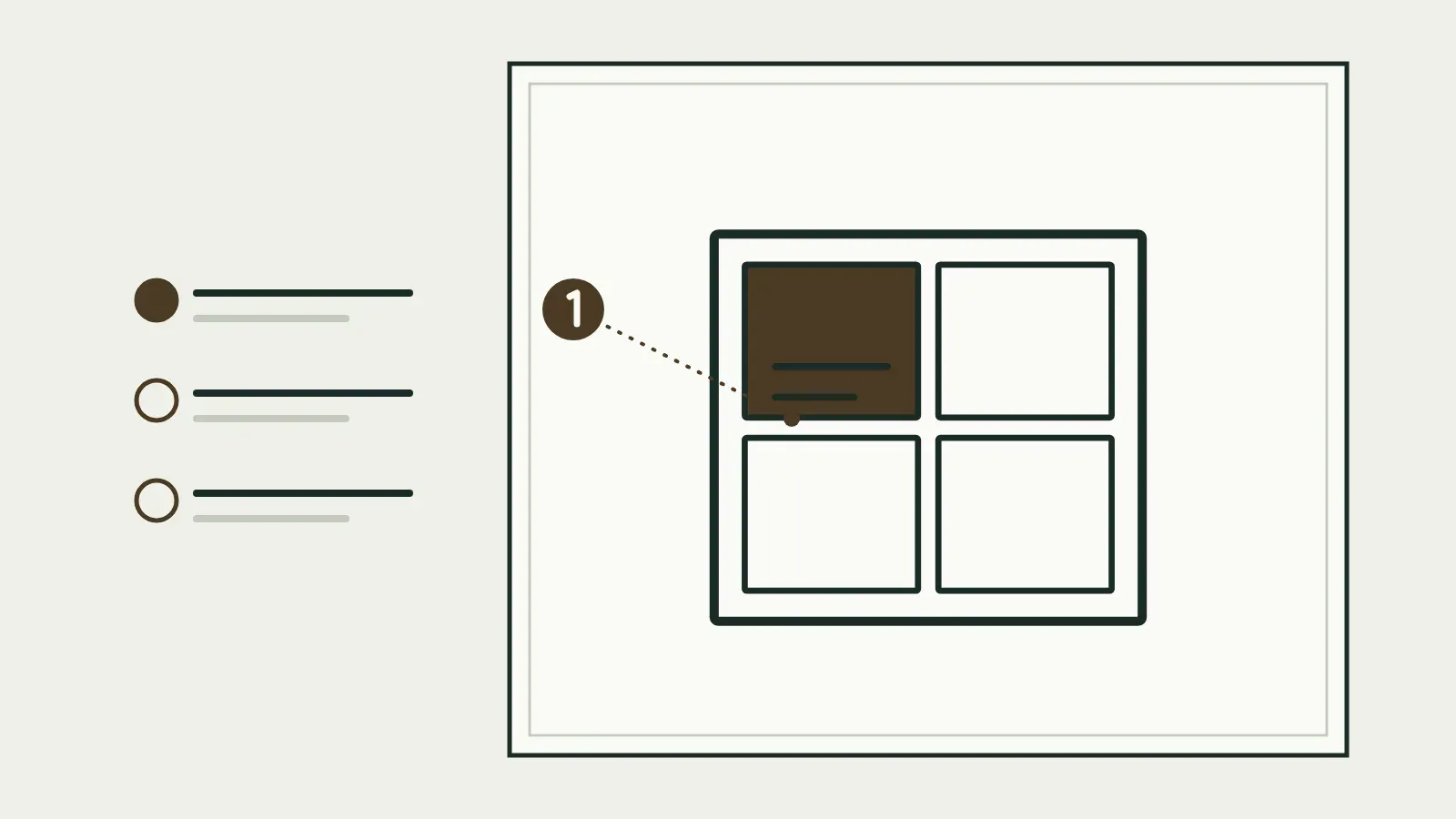
What the box is and when you get it
Under 12 CFR 1026.17, the disclosures must be clear, conspicuous, in writing and in a form you can keep. They are grouped together and set apart from the rest of the paperwork, often inside a ruled box or under a caption such as "Federal Truth in Lending Disclosures". The terms "finance charge" and "annual percentage rate" must stand out more than any other item except the lender's name.
The lender must give them to you before consummation. The official commentary adds that you must be free to review the whole document before you sign; merely showing it to you is not enough. If you are asked to e-sign before you can open the disclosure, stop and ask for it.
The four headline figures, worked
Here is the box for the site-wide example: a $10,000 loan at 14% for 36 months, with a $500 (5%) fee kept by the lender at funding, so $9,500 reaches your account. The numbers are computed, not an offer.
| Line | What it measures | Example figure |
|---|---|---|
| Annual percentage rate | Yearly price of the money you received, fees included | 17.65% |
| Finance charge | Interest for the full term plus the $500 fee | $2,804.08 |
| Amount financed | Credit you actually get, after the fee comes out | $9,500.00 |
| Total of payments | Sum of every scheduled payment | $12,304.08 |
Two checks take seconds. The amount financed plus the finance charge equals the total of payments: $9,500.00 plus $2,804.08 is $12,304.08. And the payment schedule, 36 monthly payments of $341.78, multiplies out to the same total. If either sum is off, ask why before going further. The total cost of a loan page explains how to rank offers on these figures.
The lines beneath the four boxes
- Payment schedule (1026.18(g)): the number, amount and timing of payments.
- Late charge (1026.18(l)): any dollar or percentage charge for a late payment. Details are on the late fees page.
- Prepayment (1026.18(k)): a definite statement of whether a charge may be imposed for paying early and, where it applies, whether you get a rebate of part of the finance charge. See prepayment penalties.
- Security interest (1026.18(m)): whether the lender takes or will take a lien on property, and what it is. On an unsecured personal loan this line should be absent or say none.
- Insurance and debt cancellation (1026.18(n)): the statements that make optional coverage optional, with its price and a place to sign for it. More on credit insurance and add-ons.
- Contract reference (1026.18(p)): a pointer to the contract for terms on nonpayment, default and acceleration.
The layout and the order of the lower lines differ from lender to lender. What may not vary is the substance: every line that applies to your loan must be there, and none may be buried in other text. Some lines carry the word "estimate". Regulation Z allows that only when a figure is unknown at the time and the lender uses the best information reasonably available, and it must say so clearly.
The itemization of the amount financed
Section 1026.18(c) breaks the amount financed into the money paid to you, any amount credited to an account you hold with the lender, amounts paid to others for you, and the prepaid finance charge. A lender may give you a statement that you have the right to an itemization instead, with a place to ask for one. Ask: it is where a financed add-on or a payoff sent to another creditor appears. On a debt consolidation loan, check that each payoff matches the balance on that card or loan, so nothing is left owing.
| Item | Amount |
|---|---|
| Paid to you | $9,500.00 |
| Paid to others on your behalf | $0.00 |
| Prepaid finance charge (origination fee) | $500.00 |
How exact the APR must be
Under 12 CFR 1026.22, the disclosed APR on a regular loan, with equal payments at equal intervals, counts as accurate within 1/8 of one percentage point of the true rate. On an irregular loan, for example one with several advances or uneven payments, the tolerance is 1/4 of a point.
For the example, a box showing 17.60% or 17.70% is within tolerance. A box showing 17.50% is 0.15 point below the true 17.65% and is not. To find the true figure, enter the amount financed, the payment and the number of payments in the offer comparison calculator.
If a number is wrong
- Before signing, do not sign. Ask the lender in writing to explain the figure or issue a corrected disclosure, and compare the new version line by line.
- Check the quote against the box. If the rate, fee or amount differs from what you were offered, ask which one the contract uses; the disclosure must reflect the legal obligation you are signing.
- After signing, write to the lender with the figures you believe are correct and how you got them, and keep copies.
- If it is not fixed, complain. Use the CFPB complaint form or call (855) 411-2372, and contact your state's lending regulator, listed in State rules.
Sources
- Regulation Z, 12 CFR 1026.17 — General disclosure requirements (CFPB)
- Regulation Z, 12 CFR 1026.18 — Content of disclosures (CFPB)
- Regulation Z, 12 CFR 1026.22 — Determination of annual percentage rate (CFPB)
- Regulation Z, 12 CFR 1026.4 — Finance charge (eCFR)
We checked the facts on this page against these sources on October 27, 2026. The disclosure figures are a computed example, with the APR found by the actuarial method; they are not an offer from any lender.
Questions people ask
Is the Truth in Lending disclosure the same as the loan agreement?
Often it is printed at the top of the agreement, but it is a separate required set of disclosures. The agreement holds the full terms; the box summarizes the cost and a few key terms in a standard form.
Can I get the disclosure before I apply?
The rule requires it before you are bound, not before you apply. Some lenders show estimated rates early in the process; ask for the full disclosure once you have an offer and before you accept.
Why does my disclosure show a lower amount financed than my loan amount?
Because a fee was taken out of the loan before the money was sent. The finance charge includes that fee, which is why the APR is above the interest rate. Net loan proceeds walks through the numbers.
What if a figure is labeled as an estimate?
It is allowed only when the exact figure is unknown at the time. Ask what is not yet known and when you will get the final number, and do not rely on an estimate for the APR or payment without an explanation.
Ask lenders for real offers
Describe the loan you have in mind. LendCedar passes your request to lenders and loan brokers who may contact you with offers; you compare them and decide.
- The loan you have in mind: amount, purpose, credit and income.
- Your contact details and your consent to be contacted.
- A lender or loan broker may contact you with an offer. Nothing is decided until you sign with a lender.
LendCedar is not a lender or a loan broker and does not make credit decisions.
You pay LendCedar nothing. Lenders and loan brokers pay us for requests, and they set their own rates and terms. How we make money.
Nearby in the guide
-
Offer term
Total cost of a loan
Finance charge, APR and total of payments, with three worked offers for the same $10,000 loan.
-
Offer term
Net loan proceeds
What reaches your account when a fee is deducted, and how to gross up a loan to net the sum you need.
-
Step
Signing and funding
What to check before you sign, e-signing consent, how the money arrives, and why most loans have no cooling-off period.