Personal Loans in Texas: What Licensed Lenders May Charge
Texas caps installment loans with a sliding scale: the smaller the loan, the higher the rate allowed. Here is how the tiers work for loans made from July 1, 2026, who needs a license, and where to check a lender.
Cap above 36%, by LendCedar Editorial Team Updated 6 minute read
In short
A Texas lender that makes consumer installment loans under Finance Code Chapter 342 needs a regulated lender license from the Office of Consumer Credit Commissioner (OCCC). Its rate is capped by tiers: for loans made on or after July 1, 2026, up to 30% a year on the first $4,600, 24% on the part up to $9,660 and 18% on the part up to $23,000, plus an administrative fee of up to $130. All in, that allows about 37% APR on a $2,000 two-year loan and about 27% on a $10,000 five-year loan.
- $2,000 loan cap
- 37% APR
- $10,000 loan cap
- 27% APR
- Rate tiers
- 30% / 24% / 18%
- Licensed by
- OCCC
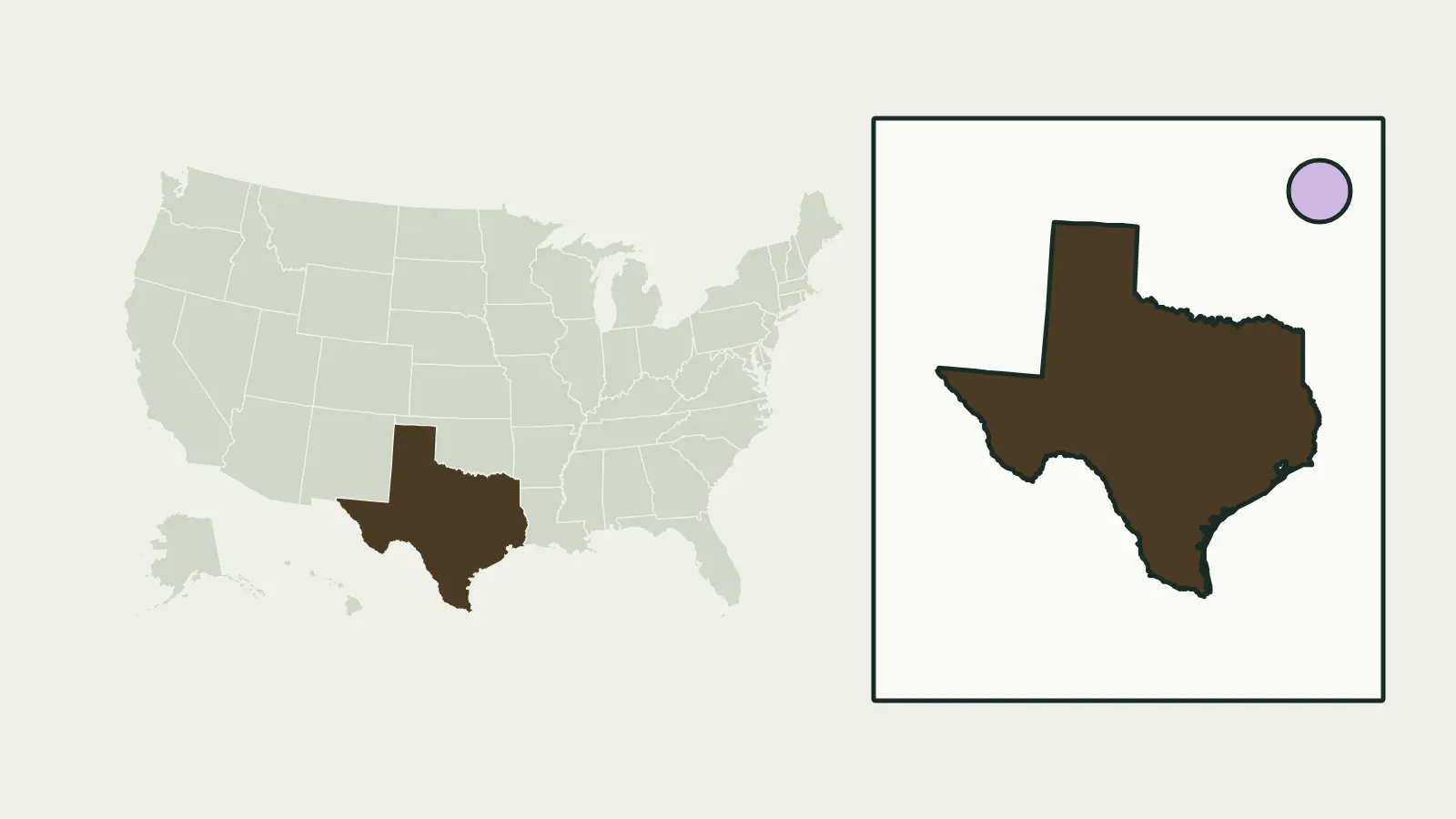
Texas at a glance
How the Texas rate tiers work
Chapter 342 gives a licensed lender more than one way to price a loan, among them add-on interest under Section 342.201(a) and a true annual rate under Section 342.201(e) that falls as the loan grows. This page follows the Section 342.201(e) method. Each part of the cash advance carries its own maximum rate, so a larger loan has a lower blended rate.
| Part of the cash advance | Maximum yearly rate |
|---|---|
| Up to $4,600 | 30% |
| $4,600.01 to $9,660 | 24% |
| $9,660.01 to $23,000 | 18% |
The dollar break points are adjusted every year with consumer prices and published by the OCCC in the Texas Credit Letter; the amounts above apply to loans made on or after July 1, 2026. The lender may also charge an administrative fee. Section 342.201(f) sets a base amount and Section 342.201(g) lets the Finance Commission set a higher maximum by rule; the OCCC announced that maximum as $130 in February 2026. Because the fee counts as a finance charge, the APR on your Truth in Lending disclosure will be higher than the contract rate.
How Texas compares with its neighbors
On the National Consumer Law Center's comparison of a $2,000 two-year loan, Texas sits in the middle of its region. Arkansas caps that loan at about 17% APR and New Mexico at 36%, while Louisiana allows about 38% and Oklahoma about 56%. If you live near a state line, the lender's license and your state of residence decide which rules apply, not where the lender is based. The state rules map shows every state side by side.
Who needs a license and who does not
A business that makes, transacts or negotiates consumer loans above the rates Texas allows unlicensed lenders must hold a regulated lender license from the OCCC. Online lenders that lend to Texans directly under state law are licensed the same way as storefront finance companies.
- Banks and credit unions answer to their own charters and banking regulators instead, and a bank may charge the rates its home state allows.
- Online lenders that partner with a bank may make loans through that bank, which can put the loan outside the Texas tiers. Ask who the lender of record is.
- Payday and auto title loans are arranged by credit access businesses under Chapter 393, a separate set of rules. Our sister site Lendmira covers them on its Texas lending laws page.
Paying early and other borrower rights
Section 342.453 requires the lender to accept payment of the loan in full at any time during regular business hours, and a partial prepayment equal to one or more full installments. On a simple-interest loan you stop paying interest on the balance you repay; on a precomputed loan, Section 342.351 and the sections after it require a refund or credit of the unearned interest. The administrative fee is different: Section 342.201(f) treats it as earned when the loan is made and not refundable.
A licensed lender must give you the federal disclosures before you sign and may not misrepresent the terms. If a lender asks for a fee before it will approve or fund the loan, treat it as a warning sign; how to verify a lender explains what to check.
Check a lender and file a complaint
- Look up the license in the OCCC's license search, by the company's name, before you apply.
- Keep the loan papers: the Truth in Lending disclosure, the agreement and any messages about fees.
- Complain to the OCCC online or by phone at (800) 538-1579 if a licensed lender breaks the rules; it handles complaints about regulated lenders.
- Send a complaint to the CFPB as well if the lender is a bank or a bank partner, or if you are unsure who regulates it.
Sources
- Texas Finance Code Chapter 342 — Consumer Loans (Texas Legislature)
- Texas Credit Letters 2026 — rate bracket adjustment for loans made on or after July 1, 2026, and the $130 administrative fee notice (OCCC)
- Office of Consumer Credit Commissioner — contact page with the consumer helpline and licensee search
- State APR caps for $500, $2,000 and $10,000 installment loans, December 2025 (National Consumer Law Center)
We checked the facts on this page against these sources on October 27, 2026. The dollar break points change every July 1; the 2027 amounts are expected in the Texas Credit Letter early in 2027.
Questions people ask
What is the maximum interest rate on a personal loan in Texas?
For a licensed lender using the Section 342.201(e) rates on a loan made from July 1, 2026, it is 30% a year on the first $4,600, 24% on the part up to $9,660 and 18% on the part up to $23,000, plus an administrative fee of up to $130 (the maximum set under Section 342.201(g)).
Can I pay off a Texas installment loan early?
Yes. Section 342.453 requires a licensed lender to accept full payment at any time during regular business hours. On a precomputed loan you get a refund or credit of the unearned interest; the administrative fee is not refunded.
Do the Texas caps apply to banks?
No. Banks and credit unions follow their own charters and federal law, and a bank can charge the rate allowed in its home state. The tiers bind lenders licensed under Chapter 342.
How do I know if a Texas lender is licensed?
Search the company name in the OCCC license search. If it is not listed and is not a bank, ask under what authority it lends to Texans before you apply. See how to verify a lender.
Are payday loans in Texas covered by these limits?
No. Payday and auto title loans in Texas are usually arranged by credit access businesses, whose fees the Chapter 342 tiers do not cap. Compare an installment loan from a licensed lender or a credit union first.
Ask lenders for real offers
Describe the loan you have in mind. LendCedar passes your request to lenders and loan brokers who may contact you with offers; you compare them and decide.
- The loan you have in mind: amount, purpose, credit and income.
- Your contact details and your consent to be contacted.
- A lender or loan broker may contact you with an offer. Nothing is decided until you sign with a lender.
LendCedar is not a lender or a loan broker and does not make credit decisions.
You pay LendCedar nothing. Lenders and loan brokers pay us for requests, and they set their own rates and terms. How we make money.
Nearby in the guide
-
Offer term
Total cost of a loan
Finance charge, APR and total of payments, with three worked offers for the same $10,000 loan.
-
Step
Verify a lender
Find the license on NMLS or with your state, match the lender of record and spot advance-fee scams.
-
Offer term
Truth in Lending disclosures
The federal box line by line: APR, finance charge, amount financed, total of payments and what sits below.