Personal Loans in South Dakota: What Licensed Lenders May Charge
Since a 2016 ballot measure, South Dakota caps loans from licensed lenders at 36% a year, with fees and add-on products counted. Here is how the cap works, who needs a license and where to check a lender.
Cap 36% or less, by LendCedar Editorial Team Updated 5 minute read
In short
A business that lends money in South Dakota needs a money lending license from the Division of Banking under chapter 54-4. Section 54-4-44, added by Initiated Measure 21 in 2016, bars a licensee from charging finance charges above an annual rate of 36%, counting the charges for any ancillary product or service and any other fee incident to the loan. A loan that breaks the cap is void: the lender cannot collect principal, interest or fees on it.
- $2,000 loan cap
- 36% APR
- $10,000 loan cap
- 36% APR
- Cap since
- November 16, 2016
- Licensed by
- SD Division of Banking
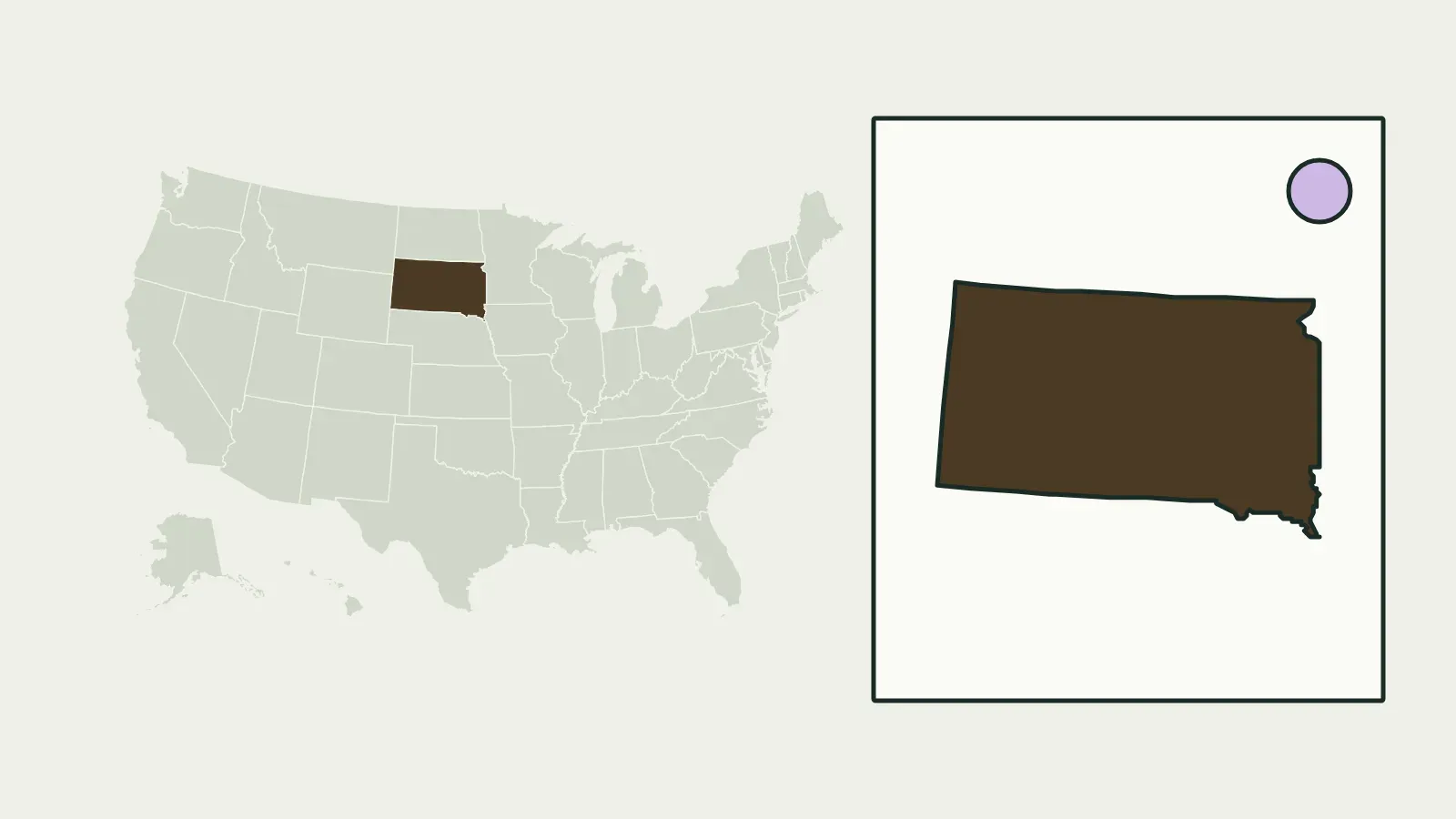
South Dakota at a glance
How the 36% cap works
The cap is a single all-in limit, the same for every loan size. Licensees may otherwise agree with you on interest and fees, but the total finance charge, including the price of add-ons sold with the loan, may not exceed an annual rate of 36%. Section 54-4-44 took effect on November 16, 2016, after voters approved Initiated Measure 21.
- Counted toward the cap: interest, origination and other fees incident to the loan, and charges for ancillary products or services.
- Not counted: late fees, returned-check fees and attorney's fees incurred after a default (section 54-4-44.3), and, on vehicle loans, items such as taxes, title fees and optional service contracts (section 54-4-44.2).
- Penalty: a loan made in violation is void and uncollectible, and the violation is a Class 1 misdemeanor.
Who needs a license and who does not
Section 54-4-52 says no person may engage in the business of lending money without a license. That business includes originating, selling, servicing or buying loans. Section 54-4-44.1 bars any device, subterfuge or pretense to get around the cap, including loans arranged by mail, telephone, internet or other electronic means, whether or not the lender has a location in the state.
- Banks and other federally insured institutions, state and national, are exempt from the license under section 54-4-37 and follow their own charters and federal law.
- Online lenders that partner with a bank may make loans through that bank. Ask who the lender of record is and whether the 36% cap applies.
- Payday and title loans from licensees are held to the same cap. Our sister site Lendmira covers them on its South Dakota lending laws page.
Other protections in chapter 54-4
When you pay a loan in full, the lender must release any lien and mark the note paid within 60 days. On short-term loans, the chapter limits renewals to four, and each renewal requires paying the outstanding fee and cutting the principal by at least 10%. Business loans of $5,000 or more to borrowers with a federal employer identification number are outside the cap, so make sure a personal loan is not written as a business loan.
Read the agreement for late fees, since they do not count toward the 36% figure. Late fees and returned payments explains what to look for.
How South Dakota compares with its neighbors
On the National Consumer Law Center's comparison of a $2,000 two-year loan, South Dakota's 36% matches North Dakota, Iowa and Montana. Minnesota caps that loan at about 33% APR, Wyoming at about 31% and Nebraska at about 30%. Your state of residence and the lender's license decide which rules apply. The state rules map shows every state side by side.
Check a lender and file a complaint
- Look up the license on NMLS Consumer Access, which the Division of Banking uses for licensing, before you apply.
- Keep the loan papers: the Truth in Lending disclosure, the agreement and any messages about fees.
- Complain to the Division of Banking through the consumer complaints page on its website, or call (605) 773-3421, if a lender charges more than 36% or lends without a license.
- Send a complaint to the CFPB as well if the lender is a bank or a bank partner. How to verify a lender lists what to check.
Sources
- South Dakota Codified Laws section 54-4-44 — Maximum finance charge (South Dakota Legislature)
- South Dakota Codified Laws chapter 54-4 — Regulation of money lending
- South Dakota Division of Banking — licensing and consumer complaints
- State APR caps for $500, $2,000 and $10,000 installment loans, December 2025 (National Consumer Law Center)
We checked the facts on this page against these sources on October 27, 2026. The cap is a fixed number in the statute and does not adjust each year.
Questions people ask
What is the maximum interest rate on a personal loan in South Dakota?
For a licensed money lender, 36% a year, counting all fees incident to the loan and the charges for add-on products. Late and returned-check fees after a default are not counted.
Where did the South Dakota 36% cap come from?
From Initiated Measure 21, a 2016 ballot measure. It added section 54-4-44, in force since November 16, 2016.
Does the South Dakota cap apply to banks?
No. Banks and other federally insured institutions are exempt from the money lending license and follow their own charters and federal law.
What happens to a loan that charges more than 36%?
Under section 54-4-44 it is void and uncollectible as to principal, fees, interest and charges, and the violation is a Class 1 misdemeanor.
Ask lenders for real offers
Describe the loan you have in mind. LendCedar passes your request to lenders and loan brokers who may contact you with offers; you compare them and decide.
- The loan you have in mind: amount, purpose, credit and income.
- Your contact details and your consent to be contacted.
- A lender or loan broker may contact you with an offer. Nothing is decided until you sign with a lender.
LendCedar is not a lender or a loan broker and does not make credit decisions.
You pay LendCedar nothing. Lenders and loan brokers pay us for requests, and they set their own rates and terms. How we make money.
Nearby in the guide
-
Offer term
Total cost of a loan
Finance charge, APR and total of payments, with three worked offers for the same $10,000 loan.
-
Step
Verify a lender
Find the license on NMLS or with your state, match the lender of record and spot advance-fee scams.
-
Offer term
Late fees and returned payments
Where the late charge appears, why the APR leaves it out, state limits in Ohio and Florida, and federal rules.