Personal Loans in New York: What Licensed Lenders May Charge
New York sets two usury limits: 16% a year for lenders without a license and 25% a year as a criminal ceiling. Here is how licensed lenders fit between them, who needs a license, and where to complain.
Cap 36% or less, by LendCedar Editorial Team Updated 6 minute read
In short
In New York, a lender without a license may not charge more than 16% a year (General Obligations Law 5-501 and Banking Law 14-a). A company that wants to charge more on consumer loans of $25,000 or less needs a licensed lender license from the Superintendent of Financial Services under Banking Law Article 9. Even a licensed lender stays under the criminal usury limit: interest above 25% a year is a felony under Penal Law 190.40. On the National Consumer Law Center's comparison, that puts the ceiling at about 25% APR on both a $2,000 and a $10,000 loan.
- $2,000 loan cap
- 25% APR
- $10,000 loan cap
- 25% APR
- Civil usury limit
- 16% a year
- Licensed by
- NY DFS
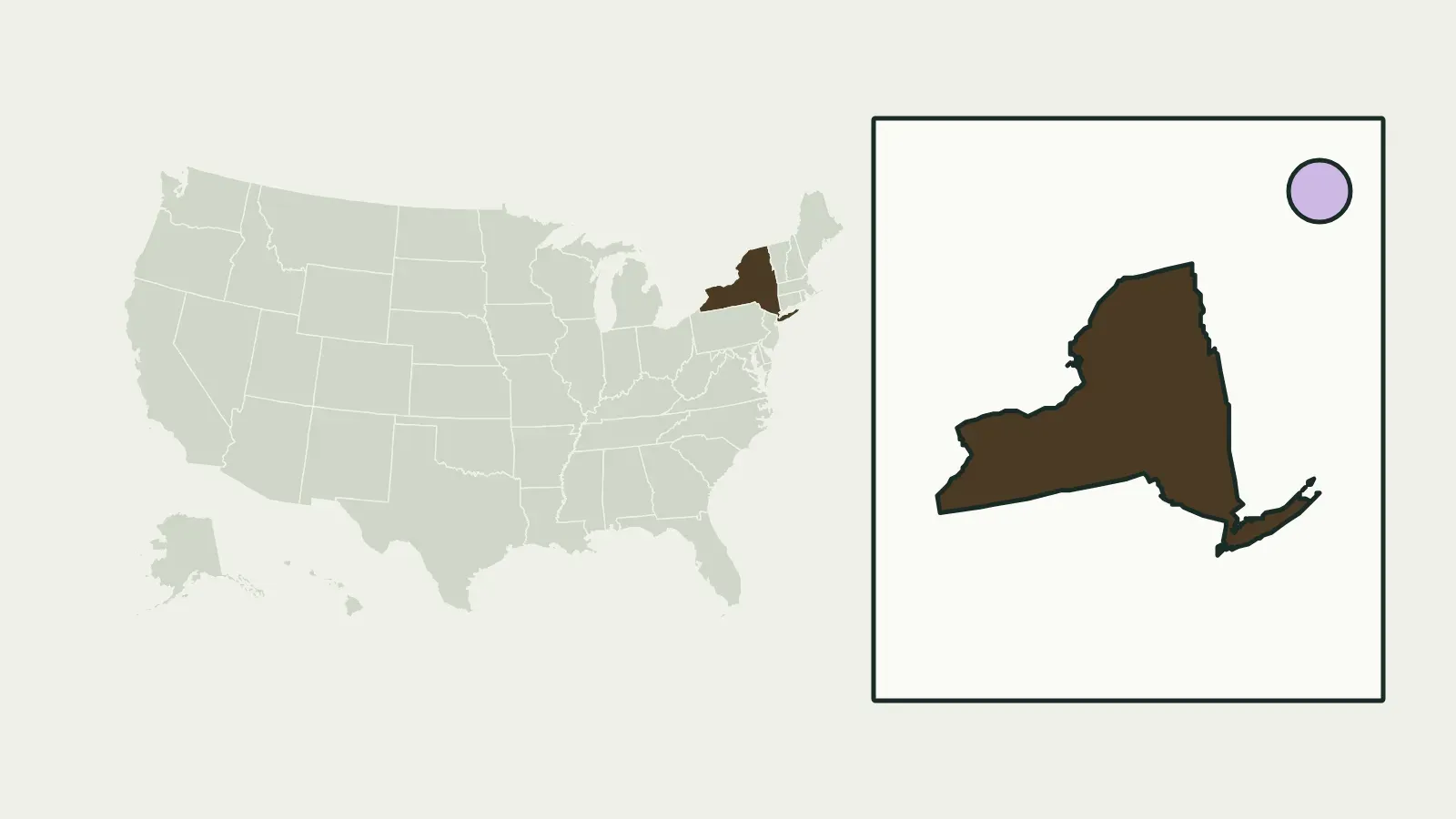
New York at a glance
How the New York limits work
New York does not publish a single rate table for personal loans. Three statutes work together. Banking Law 14-a sets the maximum rate under General Obligations Law 5-501 at 16% a year, which is the civil usury limit for ordinary lenders. Banking Law 351 lets a licensed lender charge the rate agreed with the borrower. Penal Law 190.40 makes it criminal usury in the second degree, a class E felony, to charge interest above 25% a year.
| Statute | Limit | Who it binds |
|---|---|---|
| Banking Law 14-a, GOL 5-501 | 16% a year | Lenders without a license |
| Banking Law 351 | Rate agreed with the borrower | Article 9 licensed lenders |
| Penal Law 190.40 | 25% a year | Everyone |
Section 351 also says how interest is figured: on the unpaid principal by an actuarial method, or precomputed, and never compounded. A variable rate may change no more than once in three months, based on an approved index. If a licensee knowingly charges more than the law allows, it forfeits the interest and you may recover twice the interest paid.
How New York compares with its neighbors
On the National Consumer Law Center's comparison of a $2,000 two-year loan, New York's 25% is among the lower limits in the country. Pennsylvania and Massachusetts sit near 24% and Vermont at about 21%, while New Jersey allows about 30% and Connecticut about 36%. The rules that apply follow the lender's license and your state of residence. The state rules map shows every state side by side.
Who needs a license and who does not
Banking Law 340 bars anyone from the business of making consumer loans of $25,000 or less, or business loans of $50,000 or less, at a higher rate than it could charge without a license, unless it holds a license from the superintendent. A lender counts as doing business in New York if it solicits such loans in the state and lends to New York residents, so online lenders are covered too.
- Banks and credit unions answer to their own charters and banking regulators instead, and a bank may charge the rates its home state allows.
- Online lenders that partner with a bank may make loans through that bank, which can put the loan outside the New York limits. Ask who the lender of record is.
- Occasional lenders making isolated, incidental loans are not in the business of lending and do not need the license.
- Payday and title loans are subject to the same usury statutes. Our sister site Lendmira covers them on its New York lending laws page.
Late fees, prepayment and insurance
A licensed lender may charge a default fee only after an installment is more than ten days late, and the fee may not exceed 5% of the installment in default (Banking Law 351). If you repay a precomputed loan early, you get a refund of the unearned interest. Credit insurance may be sold only as section 357 allows, and if the loan is prepaid you get back the part of the insurance charge above the lender's actual cost. Read late fees and returned payments for how to spot these charges in your agreement.
Check a lender and file a complaint
- Ask for the license before you apply: a non-bank lender charging more than 16% on a loan of $25,000 or less must be licensed by the Department of Financial Services. The department's Who We Supervise page explains what it oversees.
- Keep the loan papers: the Truth in Lending disclosure, the agreement and any messages about fees.
- File a complaint with DFS through its Consumer Complaint portal at https://www.dfs.ny.gov/complaint if a lender charges too much or is not licensed.
- Send a complaint to the CFPB as well if the lender is a bank or a bank partner. Our guide on how to verify a lender lists the warning signs.
Sources
- New York Banking Law 340 — Doing business without license prohibited (New York State Senate)
- New York Banking Law 351 — Charges by licensees (New York State Senate)
- New York Banking Law 14-a — Rate of interest (New York State Senate)
- New York Penal Law 190.40 — Criminal usury in the second degree (New York State Senate)
- New York State Department of Financial Services — file a complaint
- State APR caps for $500, $2,000 and $10,000 installment loans, December 2025 (National Consumer Law Center)
We checked the facts on this page against these sources on October 27, 2026. Banking Law 351 was last revised on June 27, 2025; the limits described here are in the current text.
Questions people ask
What is the maximum interest rate on a personal loan in New York?
A lender without a license may charge up to 16% a year. A lender licensed under Banking Law Article 9 may charge the rate agreed with you on loans of $25,000 or less, but interest above 25% a year is criminal usury under Penal Law 190.40.
Do the New York limits apply to banks?
Not in the same way. Banks and credit unions follow their own charters and federal law, and a bank can charge the rate allowed in its home state. Article 9 licensing binds non-bank lenders.
Does an online lender need a New York license?
Yes, if it solicits loans of $25,000 or less in New York, lends to New York residents and charges more than an unlicensed lender could. Banking Law 340 treats that as doing business in the state.
Who do I complain to about a New York lender?
The New York State Department of Financial Services takes complaints through its online portal. See how to verify a lender for what to check first.
Ask lenders for real offers
Describe the loan you have in mind. LendCedar passes your request to lenders and loan brokers who may contact you with offers; you compare them and decide.
- The loan you have in mind: amount, purpose, credit and income.
- Your contact details and your consent to be contacted.
- A lender or loan broker may contact you with an offer. Nothing is decided until you sign with a lender.
LendCedar is not a lender or a loan broker and does not make credit decisions.
You pay LendCedar nothing. Lenders and loan brokers pay us for requests, and they set their own rates and terms. How we make money.
Nearby in the guide
-
Offer term
Late fees and returned payments
Where the late charge appears, why the APR leaves it out, state limits in Ohio and Florida, and federal rules.
-
Step
Verify a lender
Find the license on NMLS or with your state, match the lender of record and spot advance-fee scams.
-
Offer term
Total cost of a loan
Finance charge, APR and total of payments, with three worked offers for the same $10,000 loan.