Personal Loans in Colorado: What Licensed Lenders May Charge
Colorado caps supervised loans with rate bands under its Uniform Consumer Credit Code, and in 2023 it moved to apply those caps to out-of-state banks too. Here is how the bands work, where the court fight over the opt-out stands, and how to check a lender.
Cap 36% or less, by LendCedar Editorial Team Updated 7 minute read
In short
A lender that charges more than 12% a year on a Colorado consumer loan must make it as a supervised loan, which requires a supervised lender license under the Uniform Consumer Credit Code (UCCC). The finance charge is capped at the greater of 36% on the first $1,000, 21% on the part to $3,000 and 15% above it, or 21% on the whole balance. Since July 1, 2024, Colorado has opted out of the federal rule that lets out-of-state state banks export their home rates, but a court order still blocks enforcement against members of the bank groups that sued while an en banc appeal is pending.
- $2,000 loan cap
- 31% APR
- $10,000 loan cap
- 21% APR
- Rate bands
- 36% / 21% / 15%
- Licensed by
- Colorado Attorney General
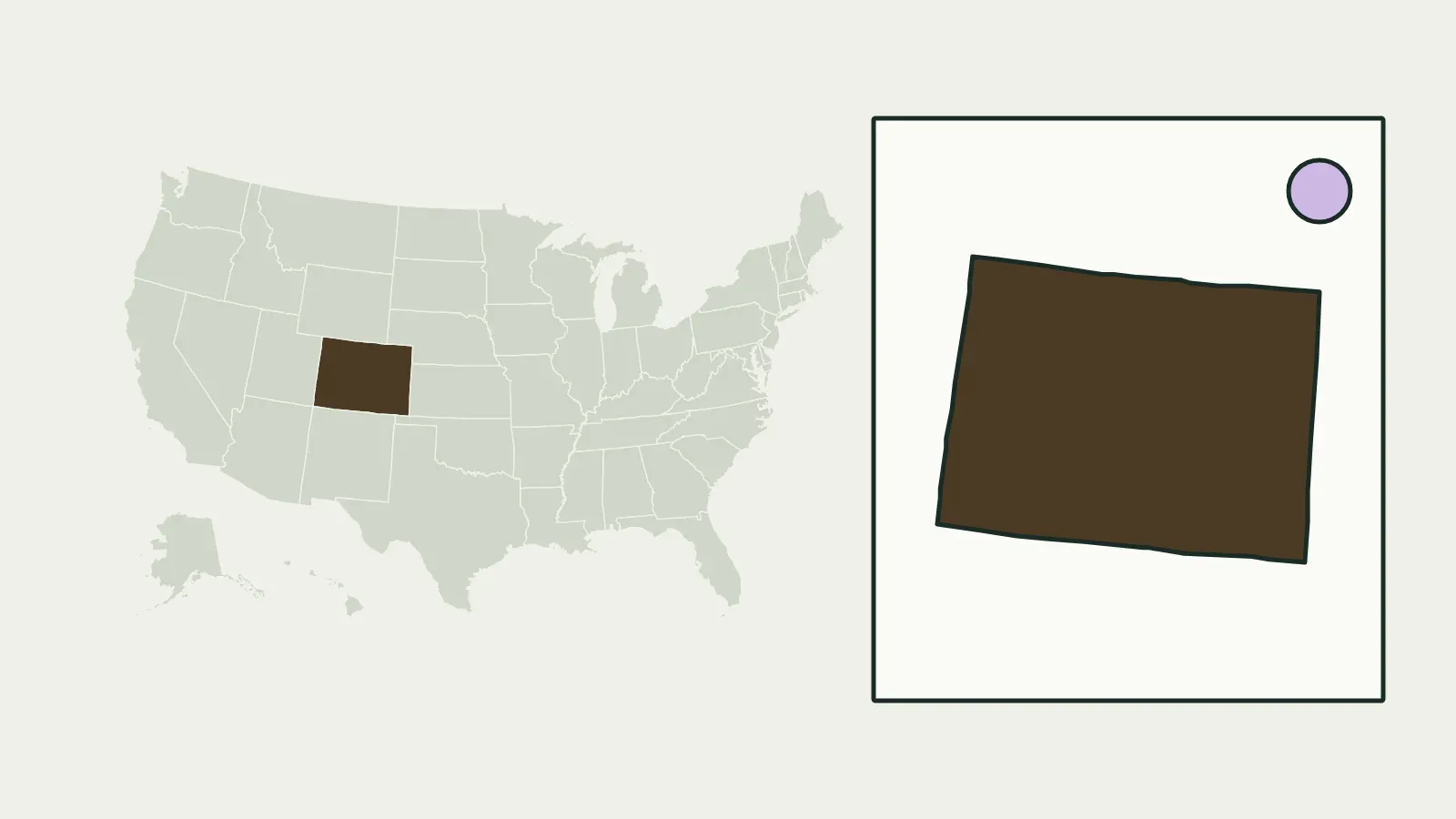
Colorado at a glance
How the Colorado rate bands work
C.R.S. 5-2-201 sets two ceilings for a supervised loan that is not a revolving account, and the lender may use whichever gives the larger charge. The first is a banded total on the unpaid balance of the amount financed; the second is a flat 21% a year. Consumer loans that are not supervised loans are limited to 12% a year.
| Part of the unpaid balance | Maximum yearly rate |
|---|---|
| Up to $1,000 | 36% |
| $1,000 to $3,000 | 21% |
| Above $3,000 | 15% |
| Alternative: whole balance | 21% |
A prepaid finance charge is allowed if it is disclosed, and the lender may set a minimum finance charge of up to $25. Both count toward the APR on your Truth in Lending disclosure. Because of the 21% alternative, larger loans in Colorado can still carry up to about 21%, even though the top band is 15%.
The 2023 opt-out and the court case
Federal law (section 521 of the Depository Institutions Deregulation and Monetary Control Act of 1980, or DIDMCA) lets a state-chartered, federally insured bank charge the rate its home state allows on loans to borrowers elsewhere. Section 525 of the same law lets a state opt out for loans made in that state. Colorado did so in House Bill 23-1229, now C.R.S. 5-13-106, effective July 1, 2024: it declares that the UCCC rates control consumer credit transactions in Colorado.
- 2024: bank trade groups sued in National Association of Industrial Bankers v. Weiser, and a federal district court issued a preliminary injunction barring Colorado from enforcing its rate limits on loans made by members of the plaintiff associations.
- November 2025: a Tenth Circuit panel reversed the injunction 2 to 1, holding that a loan is made in an opt-out state if either the lender or the borrower is located there.
- April 2, 2026: the Tenth Circuit granted rehearing en banc and vacated the panel decision, so the district court's injunction is in effect again.
Who needs a license and who does not
C.R.S. 5-2-301 bars anyone from making supervised loans, or from taking assignments of them and collecting or servicing them, without a license from the UCCC administrator. The Colorado Attorney General's office runs the UCCC lending program: it licenses lenders, investigates complaints and can take action against a lender.
- Supervised financial organizations, such as banks and credit unions, do not need the license.
- Online lenders that partner with a bank may make loans through that bank. Ask who the lender of record is, and read the opt-out section above.
- Payday loans follow their own UCCC rules. Our sister site Lendmira covers them on its Colorado lending laws page.
How Colorado compares with its neighbors
On the National Consumer Law Center's comparison of a $2,000 two-year loan from a licensed non-bank lender, Nebraska caps the loan at about 30% APR, Colorado and Wyoming at about 31%, New Mexico at 36%, Kansas at about 38% and Arizona at about 41%. Utah has no cap except an unconscionability standard. For a $10,000 five-year loan, Colorado's 21% is one of the lowest caps in the table. The state rules map shows every state side by side.
Check a lender and file a complaint
- Look up the license in NMLS Consumer Access or with the Attorney General's UCCC lending program before you apply.
- Keep the loan papers: the Truth in Lending disclosure, the agreement and any messages about fees.
- File a complaint with the Colorado Attorney General online on its credit and debt complaint page, or call the main office at (720) 508-6000. The office uses complaints to spot patterns and act on them; it says it cannot take on each individual case.
- Send a complaint to the CFPB as well if the lender is a bank or a bank partner.
Sources
- C.R.S. 5-2-201 — Finance charge for supervised loans (2025 edition, Justia)
- C.R.S. 5-2-301 — Supervised lender license (2025 edition, Justia)
- C.R.S. 5-13-106 — Opt-out of DIDMCA rate preemption, HB 23-1229 (2025 edition, Justia)
- Colorado Attorney General — File a complaint (credit and debt)
- En Banc Tenth Circuit to Consider Scope of DIDMCA Opt-Out Provision, Congressional Research Service, May 22, 2026 (EveryCRSReport copy)
- State APR caps for $500, $2,000 and $10,000 installment loans, December 2025 (National Consumer Law Center)
We checked the facts on this page against these sources on October 27, 2026. The en banc appeal over Colorado's opt-out was still pending when we checked. Dated changes are listed on our rule changes page.
Questions people ask
What is the maximum interest rate on a personal loan in Colorado?
For a supervised lender, the greater of 36% a year on the first $1,000, 21% on the part to $3,000 and 15% above that, or 21% on the whole unpaid balance. Consumer loans that are not supervised loans are limited to 12%.
Do Colorado's caps apply to out-of-state banks?
Colorado's 2023 opt-out law says they should, from July 1, 2024. A federal court injunction, back in effect since the Tenth Circuit granted rehearing en banc on April 2, 2026, blocks enforcement against member banks of the trade groups that sued. Ask any online lender which bank makes the loan.
Who regulates lenders in Colorado?
The UCCC administrator in the Colorado Attorney General's office licenses supervised lenders and investigates complaints. Banks and credit unions are supervised by banking regulators.
How do I know if a Colorado lender is licensed?
Check NMLS Consumer Access or ask the Attorney General's UCCC lending program. If the company is not licensed and is not a bank, ask under what authority it lends to Coloradans. See how to verify a lender.
Ask lenders for real offers
Describe the loan you have in mind. LendCedar passes your request to lenders and loan brokers who may contact you with offers; you compare them and decide.
- The loan you have in mind: amount, purpose, credit and income.
- Your contact details and your consent to be contacted.
- A lender or loan broker may contact you with an offer. Nothing is decided until you sign with a lender.
LendCedar is not a lender or a loan broker and does not make credit decisions.
You pay LendCedar nothing. Lenders and loan brokers pay us for requests, and they set their own rates and terms. How we make money.
Nearby in the guide
-
Offer term
Truth in Lending disclosures
The federal box line by line: APR, finance charge, amount financed, total of payments and what sits below.
-
Step
Verify a lender
Find the license on NMLS or with your state, match the lender of record and spot advance-fee scams.
-
Step
Where to borrow
Banks, credit unions, online lenders, CDFIs and finance companies: who regulates each and what they may charge.