Personal Loans in California: What Licensed Lenders May Charge
Under the California Financing Law, the rate limit depends on the loan amount: tight bands under $2,500, a cap tied to the federal funds rate from $2,500 to $9,999, and no numeric cap from $10,000. Here is how each works and where to check a lender.
Cap 36% or less, by LendCedar Editorial Team Updated 7 minute read
In short
A finance lender in California needs a California Financing Law license from the Department of Financial Protection and Innovation (DFPI). Loans under $2,500 carry monthly rate bands that start at 2.5% a month on the first $225 and fall to 1% a month above $1,650. Since January 1, 2020 (AB 539), loans of $2,500 to $9,999 are capped at 36% a year plus the federal funds rate. Loans of $10,000 or more have no numeric rate cap. An administrative fee of up to $50 or $75 may be added, depending on the loan size.
- $2,000 loan cap
- 25% APR
- $10,000 loan cap
- No numeric cap
- $2,500 to $9,999
- 36% + fed funds rate
- Licensed by
- DFPI
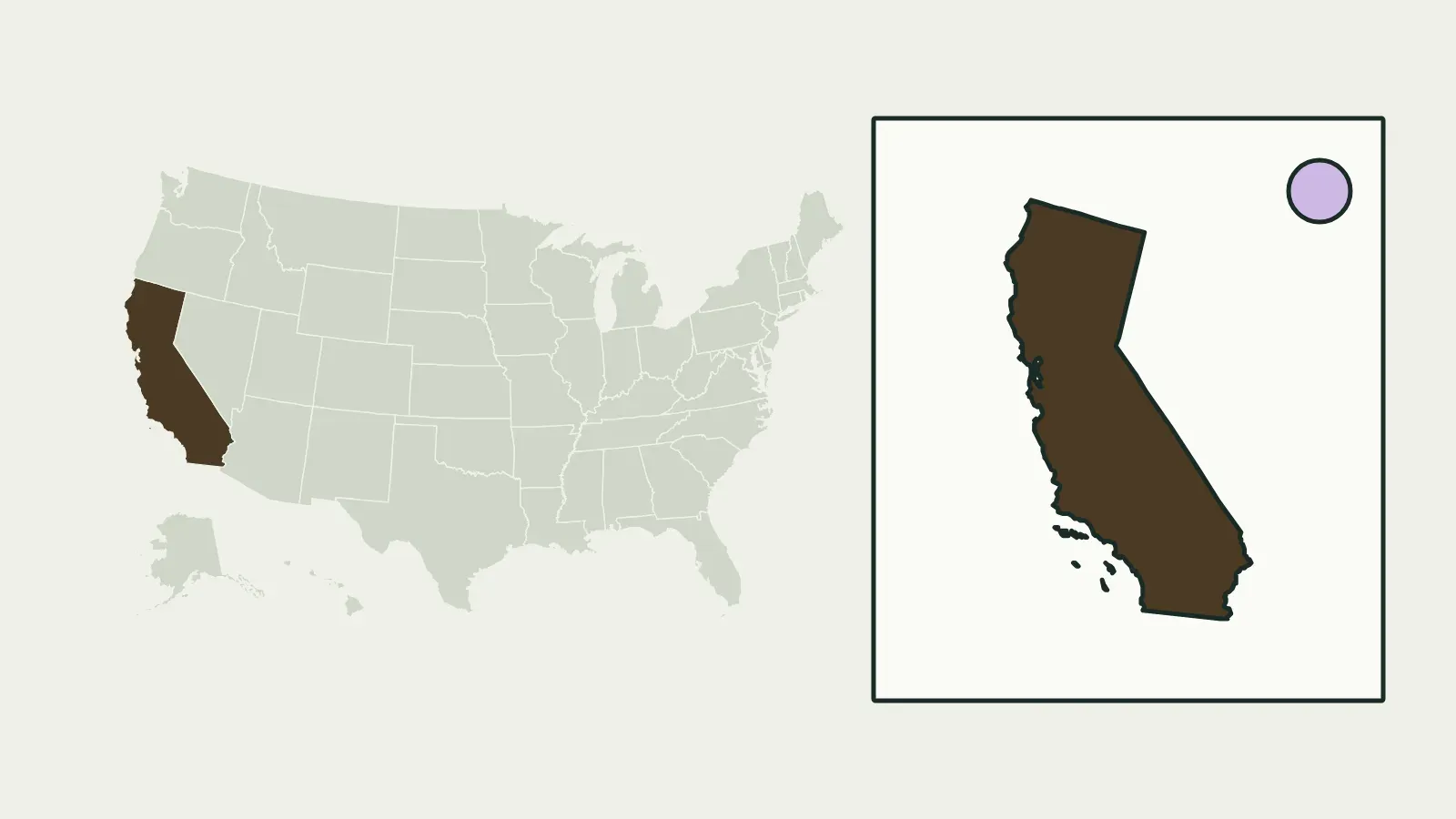
California at a glance
How the California rate limits work
The California Financing Law (Financial Code Division 9) sets a different ceiling for each loan size, measured by the bona fide principal amount. The three ranges below cover a typical personal installment loan from a licensed finance lender.
| Loan size | Section | Maximum charge |
|---|---|---|
| Under $2,500 | 22303 | 2.5% a month on the first $225, 2% to $900, 1.5% to $1,650, 1% above $1,650; Section 22304 allows an alternative of up to 1.6% a month on the whole balance |
| $2,500 to $9,999 | 22304.5 | 36% a year simple interest plus the federal funds rate |
| $10,000 and up | 22250 | The rate sections do not apply: no numeric cap |
The federal funds rate in Section 22304.5 is the one the Federal Reserve publishes in its H.15 release, as of the first day of the month before the loan is made. The H.15 release of October 26, 2026 showed an effective federal funds rate of 3.88%, which would put the cap near 39.88%. Section 22305 allows an administrative fee on top of the rate: up to 5% of the principal or $50, whichever is less, on loans up to $2,500, and up to $75 on larger loans. Only one fee may be charged until the loan is paid off.
Why a $2,000 loan can cost less than a $3,000 loan
The bands under $2,500 are much tighter than the cap above it. The National Consumer Law Center, which compares state caps, puts the most a licensed lender may charge on a $2,000 two-year loan at about 25% APR, fees included. Cross $2,500 and the ceiling jumps to 36% plus the federal funds rate. At $10,000 the numeric cap disappears, and the NCLC lists California as having no cap except an unconscionability standard for a $10,000 five-year loan.
If a lender suggests borrowing a little more than you need, check whether the larger amount moves the loan into a higher-cap range. The loan term calculator shows what the payment and total cost look like at each amount.
Who needs a license and who does not
A business that makes consumer loans in California as a finance lender needs a California Financing Law license from the DFPI. Lenders licensed under the law must follow its rate, fee and disclosure rules for the loan sizes they cover. For loans of $2,500 to $9,999 at the 22304.5 cap, the lender must also report each borrower's payments to at least one nationwide credit bureau and offer a free credit education program before funding the loan; you cannot be required to take it.
- Banks and credit unions answer to their own charters and banking regulators instead, and a bank may charge the rates its home state allows.
- Online lenders that partner with a bank may make loans through that bank, which can put the loan outside the California caps. Ask who the lender of record is.
- Payday loans follow separate California rules. Our sister site Lendmira covers them on its California lending laws page.
How California compares with its neighbors
On the National Consumer Law Center's comparison of a $2,000 two-year loan from a licensed non-bank lender, California's 25% is lower than Oregon's 36%, Nevada's about 40% and Arizona's about 41%. For a $10,000 five-year loan, Oregon caps the APR at 36% and Arizona at about 30%, while California has no numeric cap at that size. The state rules map shows every state side by side.
Check a lender and file a complaint
- Look up the license with the DFPI's Search Regulated Entities tool on dfpi.ca.gov, or in NMLS Consumer Access, before you apply.
- Keep the loan papers: the Truth in Lending disclosure, the agreement and any messages about fees.
- File a complaint with the DFPI online, by mail to Consumer Services, 2101 Arena Boulevard, Sacramento, CA 95834, or call 1-866-275-2677 for help with the form.
- Send a complaint to the CFPB as well if the lender is a bank or a bank partner; complaints about national banks go to the Office of the Comptroller of the Currency.
Sources
- California Financial Code Section 22304.5 — Rate on loans of $2,500 to $9,999 (2025 edition, Justia)
- California Financial Code Sections 22303 and 22304 — Rates on loans under $2,500 (2025 edition, Justia)
- California Financial Code Section 22305 — Administrative fee (2025 edition, Justia)
- California Financial Code Section 22250 — Loans of $10,000 or more (2025 edition, Justia)
- Department of Financial Protection and Innovation — File a complaint
- Federal Reserve H.15 Selected Interest Rates, release of October 26, 2026
- State APR caps for $500, $2,000 and $10,000 installment loans, December 2025 (National Consumer Law Center)
We checked the facts on this page against these sources on October 27, 2026. The cap on loans of $2,500 to $9,999 moves with the federal funds rate, so the figure near 39.88% is for illustration only.
Questions people ask
What is the maximum interest rate on a personal loan in California?
For a California Financing Law licensee, it depends on the amount. Under $2,500, monthly bands from 2.5% down to 1%, or up to 1.6% a month on the whole balance. From $2,500 to $9,999, 36% a year plus the federal funds rate. From $10,000 up, there is no numeric cap.
When did California cap loans of $2,500 to $9,999?
AB 539 (Statutes of 2019, chapter 708) added Financial Code Section 22304.5, effective January 1, 2020. The same law amended the loan-size exemptions in Section 22250.
Can a California lender charge a fee on top of the rate?
Yes, one administrative fee: up to 5% of the principal or $50, whichever is less, on loans up to $2,500, and up to $75 on larger loans. A fee taken from the loan reduces what you receive; see net loan proceeds.
How do I know if a California lender is licensed?
Search the company in the DFPI license search or NMLS Consumer Access. If it is not listed and is not a bank, ask under what authority it lends to Californians. See how to verify a lender.
Ask lenders for real offers
Describe the loan you have in mind. LendCedar passes your request to lenders and loan brokers who may contact you with offers; you compare them and decide.
- The loan you have in mind: amount, purpose, credit and income.
- Your contact details and your consent to be contacted.
- A lender or loan broker may contact you with an offer. Nothing is decided until you sign with a lender.
LendCedar is not a lender or a loan broker and does not make credit decisions.
You pay LendCedar nothing. Lenders and loan brokers pay us for requests, and they set their own rates and terms. How we make money.
Nearby in the guide
-
Offer term
Net loan proceeds
What reaches your account when a fee is deducted, and how to gross up a loan to net the sum you need.
-
Step
Verify a lender
Find the license on NMLS or with your state, match the lender of record and spot advance-fee scams.
-
Offer term
Total cost of a loan
Finance charge, APR and total of payments, with three worked offers for the same $10,000 loan.